
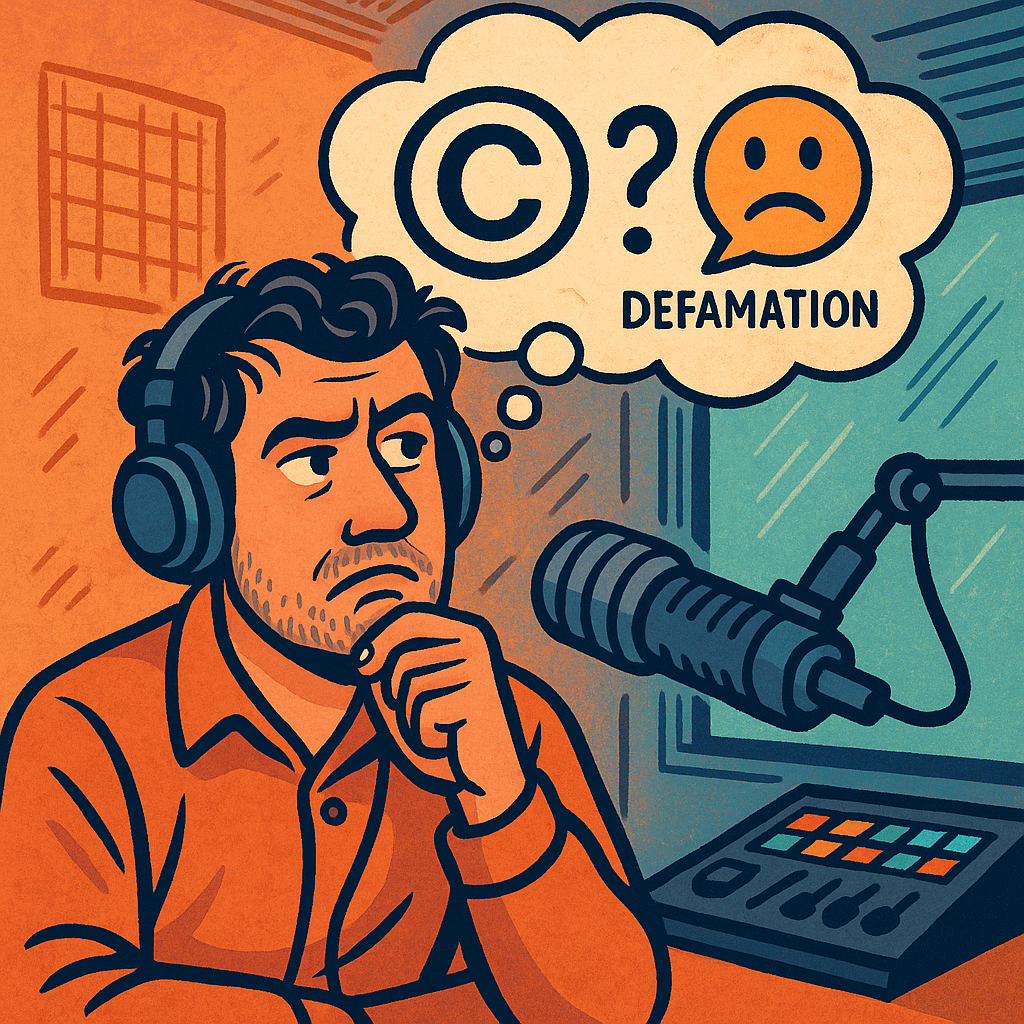
A borrowed clip can raise two different questions: may you use the material, and does the way you present it communicate a false factual claim about someone? Permission to copy does not settle the second question. A fair-use defense addresses copyright, not every issue in a publication.
Smith v. Summit: A Dispute About Takedown Claims
In Smith v. Summit Entertainment LLC, the June 6, 2011 order addressed a musician’s allegations that Summit sent websites notices falsely claiming rights in his song. The court allowed his claim under 17 U.S.C. §512(f), certain interference claims, and defamation claim to proceed. It dismissed other claims, including his copyright-infringement claim.
This was a ruling on a motion to dismiss, not a finding that the allegations were proved. It illustrates that statements made while asserting copyright rights can create separate legal questions.
Murphy v. Millennium Radio: A Photo and an On-Air Response
In Murphy v. Millennium Radio Group LLC, a station employee scanned a magazine photograph and posted it online without the photographer’s permission. The posted scan omitted the credit identifying Peter Murphy. After his lawyer objected, statements about Murphy aired on the station.
The Third Circuit’s June 14, 2011 opinion rejected the fair-use defense for the unaltered photograph and reversed summary judgment on the copyright, copyright-management-information, and defamation claims. The defamation issue required further discovery; the opinion did not establish that every challenged statement was actionable.
Review Rights and Meaning Separately
For copyright, identify the source, permission or license, and any basis for fair use. For a statement about someone, consider what the audience will understand as fact, what supports it, and whether the edit changes its meaning. A harsh opinion or an unflattering portrayal is not automatically defamatory.
Masson v. New Yorker Magazine explains why material changes in meaning matter when evaluating altered quotations. Preserve the full recording so the published excerpt can be checked in context.
Before You Publish—or Respond to a Complaint
Review captions, headlines, introductions, and replies alongside the clip itself. A careful original post can be undermined by a careless accusation in a later response.
Start the Use Check and select the copyright or defamation track that fits your concern. If both are involved, review both. A demand letter or disputed publication calls for advice about the specific facts.
Related Reading
- The Soundbite Trap: How Editing in Radio and Podcasting Creates Legal Risk
- You Cut for Time. They Cut You a Lawsuit.
- I’m Publishing Something Risky
- Copyright & Fair Use Resource Center
- Broadcaster Rights Resource Center
Need help evaluating media risk before publishing?
If editing, commentary, clipping, or republishing creates legal risk for your show, publication, or brand, Harrison Legal Group can review the situation before it becomes a bigger problem.
Matthew B. Harrison is a media and intellectual property attorney who advises radio hosts, content creators, and creative entrepreneurs. He has written extensively on fair use, AI law, and the future of digital rights. Reach him at Matthew@HarrisonMediaLaw.com or read more at TALKERS.com.