
Before you use that clip, know where the risk is.
This is not theory. This is how fair use actually works when your content is on the line.
Most creators do not get into trouble because they are reckless.
They get into trouble because they were wrong about what mattered.
They thought attribution helped. They thought shorter meant safer. They thought commentary automatically solved the problem. They thought fair use protected them in advance.
It does not.
Fair use is a defense argued later, after a dispute exists, with a record you may no longer control.
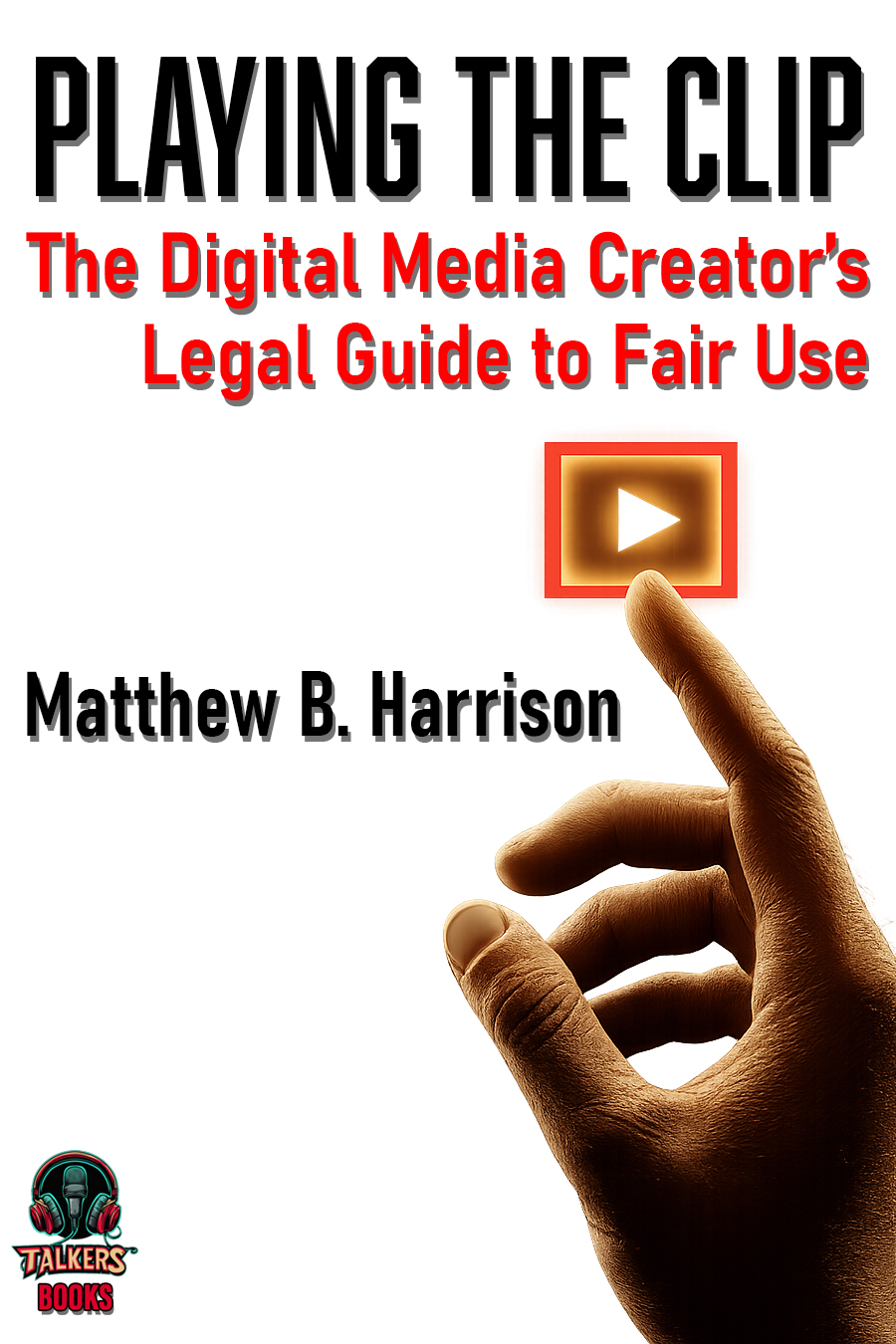
Playing the Clip is written for the moment before that happens.
What this book actually does
- Explains when using a clip may be defensible and when it is not
- Shows why credit and “short clips” are not legal defenses
- Breaks down how courts actually look at purpose, transformation, and market harm
- Clarifies the difference between commentary, reporting, reacting, and copying
- Gives creators, broadcasters, and publishers a practical framework before they publish
This is not written from the outside looking in.
I am a media lawyer. I also understand how content is actually made.
The law does not care how fast you had to move, how tight the deadline was, or how a platform rewards speed over caution. But your decisions still happen in that reality.
This book exists to bridge that gap.
The method: “Play the Clip”
Modern creators do not merely describe content. They show it. They play the clip. They use the screenshot. They quote the line. They pull the segment into a new context and build something around it.
That creates power. It also creates risk.
This book explains how to think about that process without guessing where the line is.
Get the book
If you want the full framework in one place, start here.
Radio & Podcast Interviews
Book Matthew Harrison to discuss fair use, clips, and creator risk.
Playing the Clip gives hosts a practical starting point for conversations about copyright, commentary, reaction content, broadcasting, and the legal risks creators face before they publish.
Put the framework to work
Before you play the clip—check the clip.
Run the specific use you are considering through The Use Check for a free preliminary fair-use concern level.
Still not sure about a specific situation?
The book gives you the framework. Your situation still matters.